DIS ’26 · 2026
Profy
Interpretable Visualization of Expertise-DependentMotor Skills Toward Supporting Piano Practice
ピアノ学習者が、練習し直す場所を見つける手がかりを示す。Helping piano learners identify passages to revisit in practice.
1 The University of Tokyo 2 Sony Computer Science Laboratories 3 NeuroPiano Institute
Designing Interactive Systems Conference · June 13–17, 2026 · Singapore
研究の概要Overview
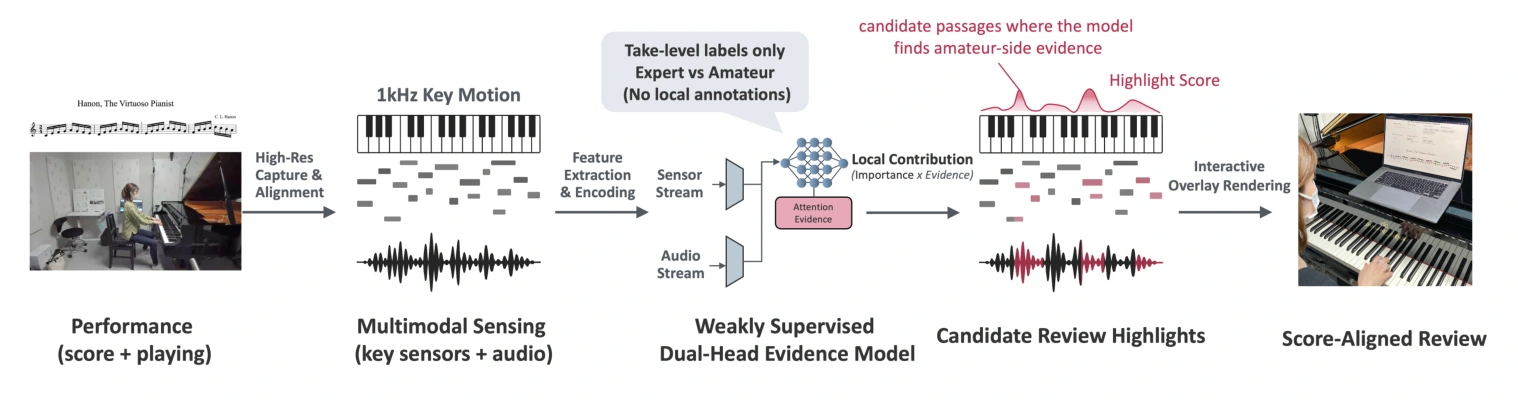
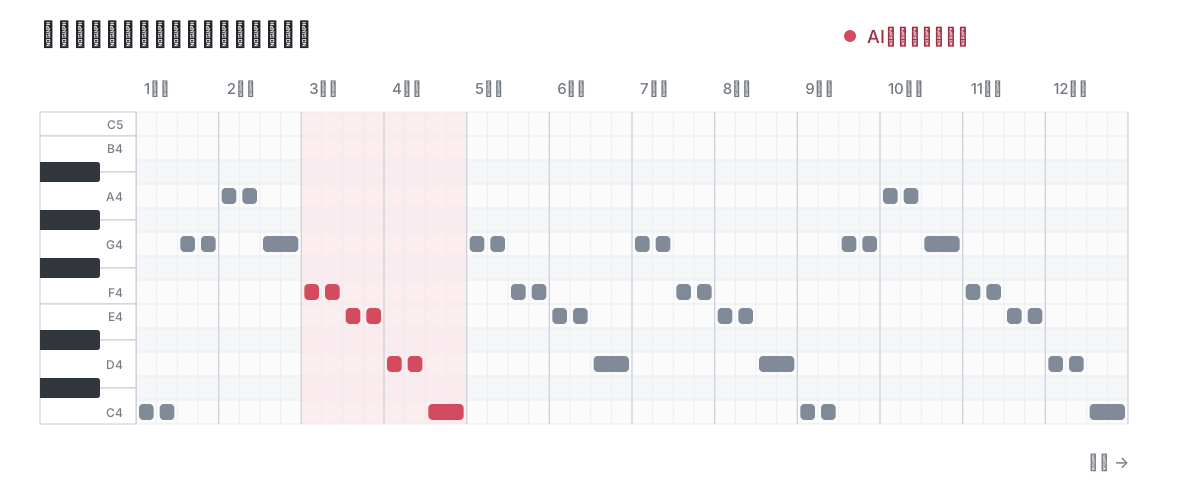
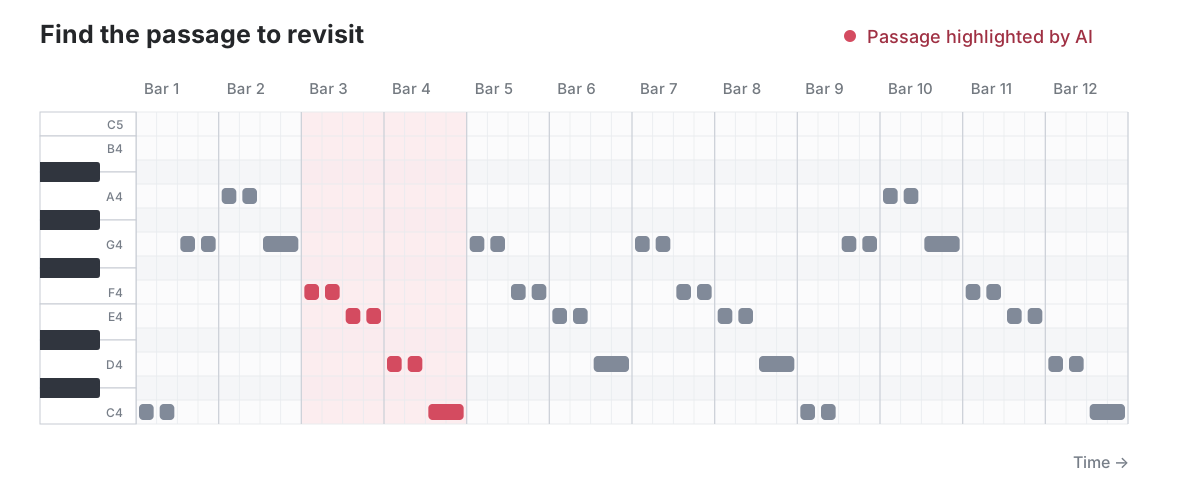
演奏全体に点数をつけるだけでは、次にどこを練習すればよいか分かりにくい。Profyは、鍵盤の動きと演奏の音を調べ、聴き直す候補を時間軸上に示します。楽譜と対応づけられる場合は楽譜上にも表示し、気になる部分の再生や繰り返しを助けます。
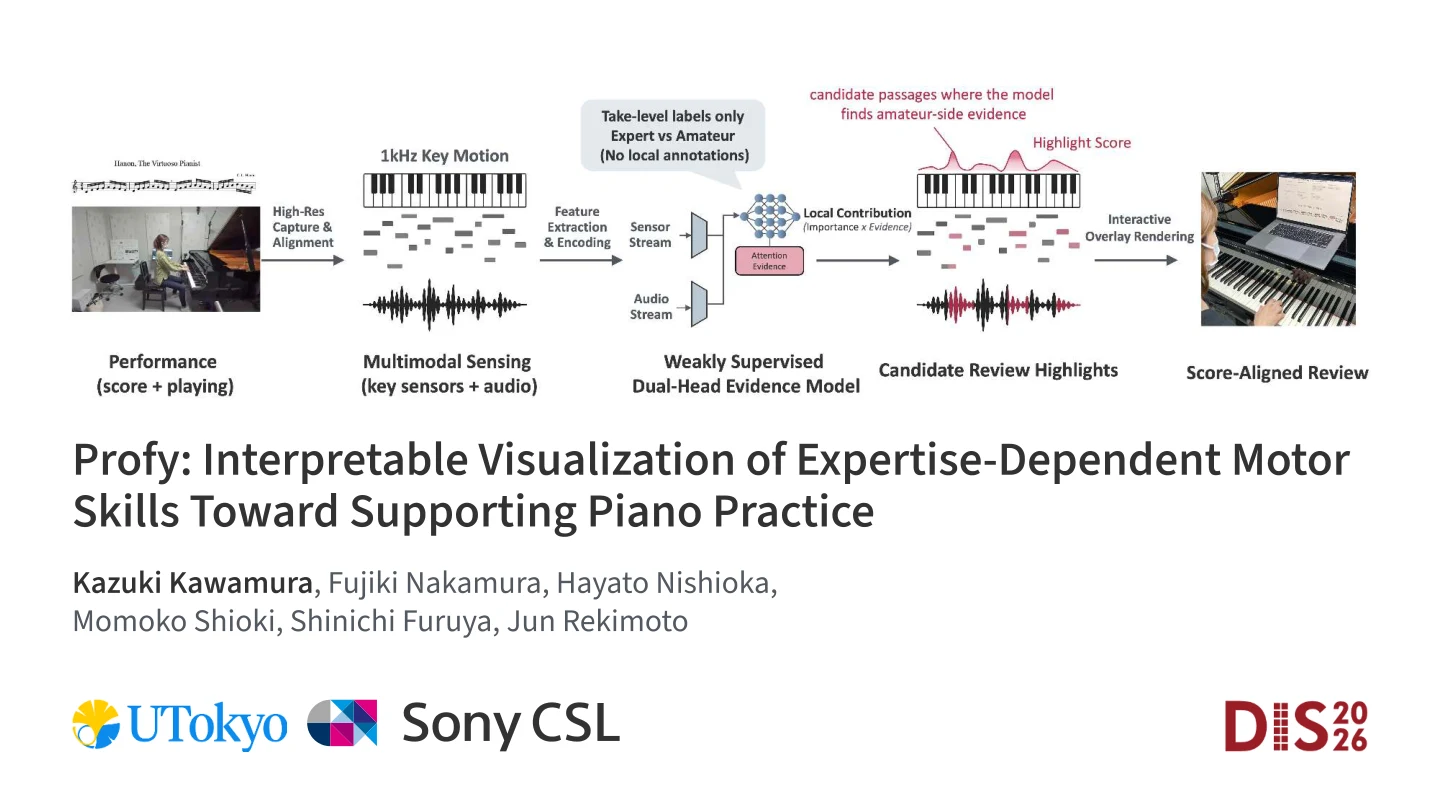
A single score for a performance rarely tells a learner where to practice next. Profy analyzes synchronized piano key motion and audio to highlight passages for review. Time-aligned cues, and score overlays when alignment is available, support scrubbing, looping, and focused replay.
どのように動くかHow it works
- 鍵盤の動きを毎秒1,000回記録し、演奏の音と時間をそろえて分析します。
- 学習に使うのは、演奏全体に対する評価から作った「熟練者らしい/アマチュアらしい」というラベルです。どの瞬間を見直すべきかという細かな正解は、モデルの学習に使いません。
- モデルが判断に使った時間ごとの手がかりを、見直す場所のハイライトに変えます。
- Capture key motion at 1 kHz, synchronized with performance audio.
- Learn from take-level expert/amateur labels derived from listener ratings, without localized training annotations.
- Turn time-localized model evidence into review highlights.
何が分かったかFindings
- 演奏全体の評価を予測できました。73人・1,083件の演奏を使い、学習に含めていない人の演奏が「熟練者らしい/アマチュアらしい」のどちらと評価されたかを予測しました。正解率は平均78.2%で、常に件数の多い側を答える方法の55.1%を上回りました。
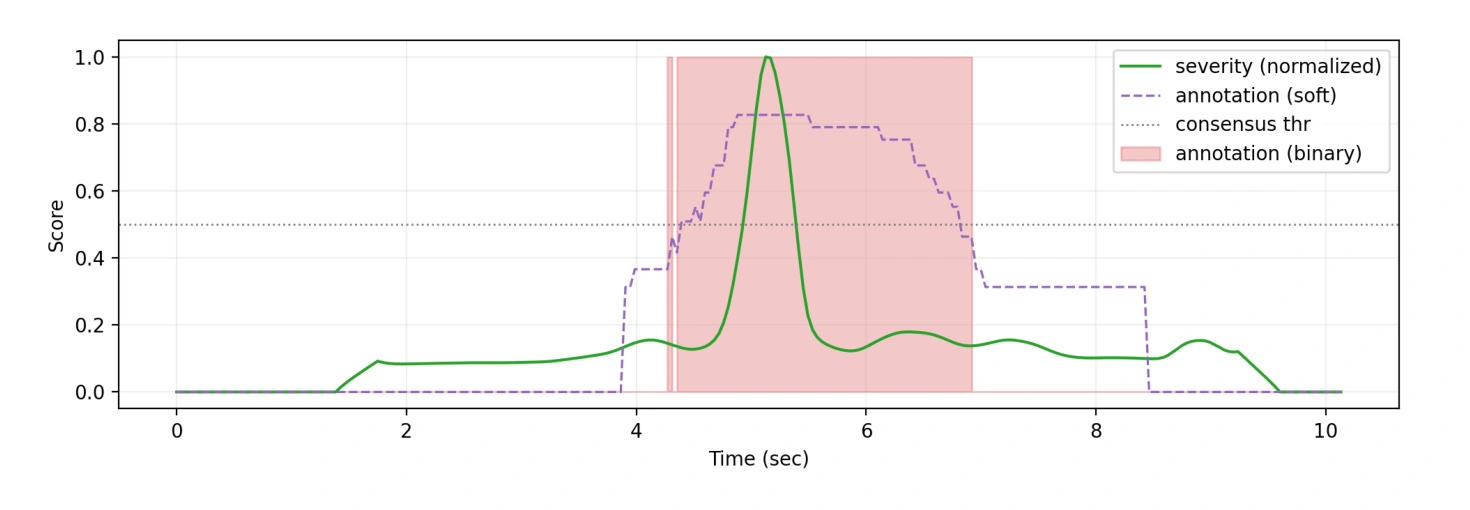
- 聴き直す場所も、専門家の指摘と重なりました。専門家21人が演奏20件に付けた印と比較したところ、注目する場所の傾向を表す相関係数は0.61(1に近いほど同じ傾向)、専門家が選んだ場所を優先して示す指標ROC-AUCは0.75(偶然なら0.50)でした。
- 演奏全体への評価だけから学習しても、専門家が確認したい場所に近い候補を示せました。演奏を丸ごと聴き直す際に、どこへ注意を向ければよいかの手がかりになります。
- The model predicted overall performance ratings. Using 1,083 takes from 73 pianists, it classified expert-like versus amateur-like labels for performers excluded from training with 78.2% mean accuracy, compared with 55.1% for always choosing the more common label.
- Local review highlights also aligned with expert judgments. Compared with spans marked by 21 expert pianists on 20 clips, the highlight pattern achieved Pearson r = 0.61 (1 indicates the same pattern). ROC-AUC was 0.75 for ranking expert-selected moments above other moments (0.50 is chance).
- Overall performance labels were enough to produce local review candidates resembling expert selections. These cues offer a starting point for deciding where to focus when listening back to a performance.
発表スライドPresentation slides
引用Citation
@inproceedings{kawamura2026profy,
  title = {Interpretable Visualization of Expertise-Dependent Motor Skills Toward Supporting Piano Practice},
  author = {Kazuki Kawamura and Fujiki Nakamura and Hayato Nishioka and Momoko Shioki and Shinichi Furuya and Jun Rekimoto},
  booktitle = {Designing Interactive Systems Conference},
  year = {2026},
  publisher = {Association for Computing Machinery},
  doi = {10.1145/3800645.3812903}
}本文と図は上記の原著論文に基づきます。図をクリックすると拡大できます。Text and figures are based on the original paper linked above. Select a figure to view it at full size.